
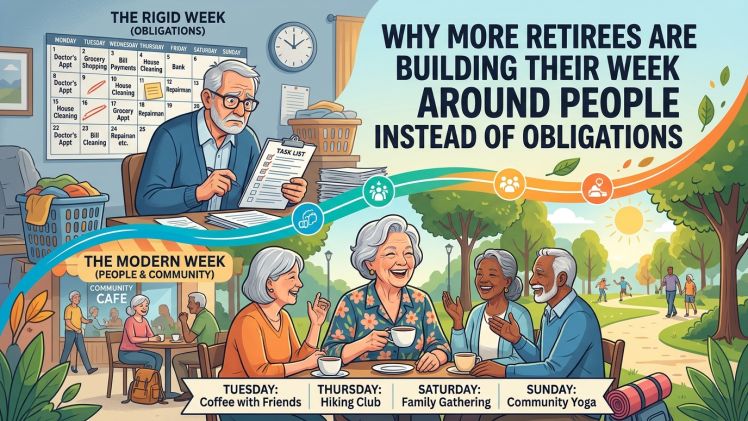
What happens when the calendar no longer fills itself with work deadlines, meetings, and professional obligations? Many retirees discover that the freedom retirement promises creates an unexpected challenge: how to structure time in a way that brings genuine fulfillment. A growing number of retirees are answering this question by fundamentally shifting their priorities. Instead of organizing their weeks around tasks and responsibilities, they are deliberately building their schedules around meaningful connections and time with the people who matter most. This shift reflects a deeper understanding of what actually contributes to life satisfaction after decades of career-focused living.
The Transition from Task-Based to Person-Centered Living
The working years typically demand that time be organized around productivity and deadlines. Projects need completion, meetings require attendance, and professional obligations take priority. This task-oriented framework becomes so ingrained that many workers continue thinking this way even as they transition into retirement. However, retirees increasingly recognize that this same approach no longer serves them. When external obligations diminish, the opportunity emerges to structure time around activities that create lasting emotional fulfillment rather than temporary achievement satisfaction. Research in gerontology and psychology suggests that social connection and meaningful relationships consistently rank as top contributors to life satisfaction in older adulthood, often outweighing financial security or health status.
The shift toward person-centered scheduling represents a fundamental reorientation of values. Rather than asking “What needs to be done this week?” retirees are asking “Whom do I want to spend time with, and how often?” This reframing transforms free time from an empty space to be filled into a valuable resource to be allocated deliberately. Grandchildren, adult children, old friends, and community members become the organizing principle of the weekly calendar instead of secondary considerations squeezed into leftover time. For many retirees, this change arrives as a revelation, one in which the career-building urgency that shaped earlier decades no longer applies and genuine freedom to redesign daily life finally becomes available.
Building Deeper Connections With Family
Many retirees prioritize consistent, regular time with family members once the constraints of employment disappear. Grandparents who want to be actively involved in their grandchildren’s lives can now attend school events, participate in weekend activities, and provide regular childcare support without competing work demands. This availability transforms relationships, so that children and grandchildren experience a family member defined by genuine presence rather than rushed visits between obligations. Research on intergenerational relationships shows that consistent contact strengthens family bonds and provides children with a sense of stability across generations.
Beyond grandparenting, adult children benefit from having aging parents available for regular contact. Weekly lunches, shared hobbies, and genuine time for conversation become feasible when retirement removes the barrier of work schedules. Many retirees report that their relationships with adult children fundamentally improve once they have time to engage without the distraction of professional stress. The quality of these connections often matters more than grand gestures or expensive trips, and consistent, reliable presence becomes a gift that retired life can offer in ways that working life cannot.
Reconnecting With Friendships and Expanding Community
Work friendships often fade when retirement arrives because the shared environment that created them disappears. However, retirees who intentionally organize their weeks around people frequently discover that this transition creates space to deepen friendships formed earlier in life. Long-standing friendships that survived despite busy work schedules can now become central to weekly structure rather than occasional touches. A weekly walking group, a monthly dinner club, or regular game nights provide the consistency that transforms relationships from “we should catch up sometime” to genuine, active friendships.
Beyond rekindling existing friendships, retirement also creates opportunities to develop new connections within communities. Retirees with consistent availability can participate more deeply in volunteer work, join clubs or classes based on genuine interest, and become reliable members of community organizations. This regular participation often leads to meaningful friendships that develop naturally through shared purpose and repeated contact. Whether through faith communities, hobby groups, educational programs, or service organizations, retirees who structure their weeks around community participation frequently report higher life satisfaction and a stronger sense of purpose than those who approach retirement primarily as a period of rest.
Creating Structure That Reflects Personal Values
Retirement removes the external structure that employment provided, which creates both freedom and the need to build new structure intentionally. Retirees who explicitly organize their weeks around people rather than obligations report that this approach naturally provides the rhythm and purpose that humans need. Unlike task-based structure, which often feels imposed from outside, person-centered structure emerges from genuine values and desires. For retirees who want to engage in enriching programs and cultivate new friendships every day, Allen Place provides a vibrant community environment where social connection is woven into the daily routine. A retiree might schedule consistent time with specific people, set regular meeting dates, or commit to recurring community activities, ensuring that the relationships that matter most receive dedicated time rather than being squeezed into the margins.
This approach also guards against one of retirement’s subtler challenges: the gradual social isolation that can occur when external structure disappears. When no obligation pulls a person into regular contact with others, consistent connection requires deliberate effort and planning. Retirees who recognize this dynamic and actively structure their weeks accordingly maintain the regular social contact that research consistently links to physical health, cognitive function, and emotional well-being. The specific schedule matters less than the principle of intentionality, and what counts most is recognizing that meaningful relationships require dedicated time and that retirement provides the opportunity to give them exactly that.
Conclusion
The shift toward person-centered living in retirement represents a practical recognition of what actually contributes to life satisfaction in the later years. When career obligations no longer dominate the calendar, retirees who deliberately organize their time around meaningful relationships and community connection experience the fulfillment that retirement ideally offers. Family relationships deepen when grandparents have genuine availability, and friendships strengthen when regular contact becomes part of weekly structure rather than a sporadic luxury. Community involvement provides purpose and belonging when it becomes a committed part of how time is organized. Retirees who build their weeks around people rather than obligations ultimately discover that this restructuring of priorities aligns with what humans need most: consistent, genuine connection with others.