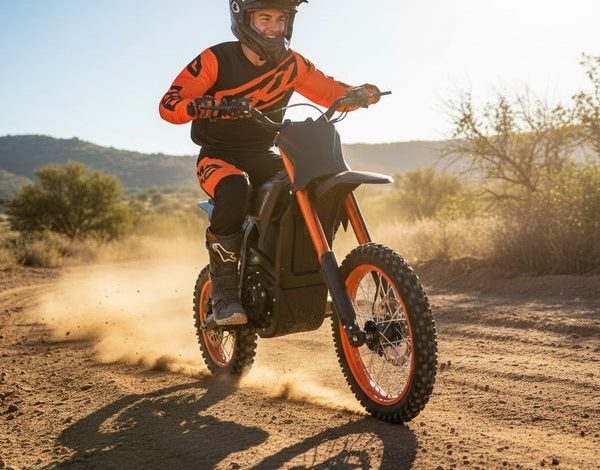
Electric dirt bikes are no longer a novelty — they’ve become a serious choice for adult riders who want capable, low-maintenance machines for off-road adventures. As more riders make the switch from gas-powered bikes, one challenge consistently rises to the top: getting the suspension dialed in correctly. A poorly tuned suspension doesn’t just make for an uncomfortable ride; it compromises safety, reduces traction, and puts unnecessary stress on the bike’s components.
Understanding Electric Dirt Bike Suspension Systems
At its core, a dirt bike suspension system consists of two main components: the front forks and the rear shock absorber. The front forks — typically telescopic tubes filled with oil and spring — absorb impacts from rocks, roots, and uneven terrain before they reach the handlebars. The rear shock works in tandem with a linkage system to cushion the back end of the bike, keeping the rear wheel planted and responsive. Together, these components determine how your bike handles bumps, corners, and jumps.
Electric dirt bikes introduce unique challenges that gas-powered models simply don’t have. The battery pack — often the heaviest single component on the bike — sits low in the frame, shifting the center of gravity compared to a traditional engine layout. This lower, more centralized weight distribution changes how the suspension needs to be configured, particularly in terms of sag settings and spring rate selection. Add to that the instant torque delivery of an electric motor, which puts immediate stress on the rear suspension during acceleration, and it becomes clear that copying gas bike settings won’t cut it.
Proper suspension setup is not just about comfort — it’s fundamental to off-road performance and safety. A well-tuned suspension keeps both tires in consistent contact with the ground, improving traction on loose or technical terrain. It reduces rider fatigue on long trail rides and prevents premature wear on the bike’s frame and components. Skipping this setup step is one of the most common mistakes new electric dirt bike owners make, and it’s one of the easiest to fix with a little knowledge and patience.
Step-by-Step Guide to Electric Dirt Bike Suspension Setup
Getting your suspension dialed in properly transforms how your electric dirt bike handles everything from smooth fire roads to rocky, technical singletrack. Unlike gas bikes where riders often inherit settings from previous owners or copy online presets, electric dirt bikes require a fresh approach — one that accounts for their distinct weight characteristics and power delivery. The process doesn’t require professional mechanical skills, but it does demand patience, methodical thinking, and a willingness to test and adjust. Follow these steps in order, and you’ll have a solid baseline setup that you can refine over time.
Gathering Tools and Performing Pre-Ride Checks
Before touching any adjustment clickers or spring preload collars, gather what you’ll need: a metric wrench set, a zip tie or dedicated sag measuring tool, a tape measure, a notepad to record settings, and a tire pressure gauge. Check that your tires are inflated to the manufacturer’s recommended PSI — incorrect tire pressure throws off suspension feel immediately. Inspect the fork seals for oil leaks and confirm the rear shock linkage bearings are clean and properly greased. Starting with a mechanically sound bike ensures your suspension adjustments actually reflect true performance rather than masking an underlying problem.
Setting Sag for Proper Weight Distribution
Sag is the amount your suspension compresses under the rider’s weight while seated in a natural riding position, and it’s the single most important suspension measurement you’ll make. For most electric dirt bikes, target 95–105mm of rear sag and 30–40mm of front sag. To measure rear sag, have a friend hold the bike upright while you sit in your normal riding position with full gear. Measure from the rear axle to a fixed point on the fender, then measure again with the bike unloaded. The difference is your sag figure. Electric bikes often need slightly stiffer spring preload settings than equivalent gas models because of the battery’s added weight — adjust the preload collar on the rear shock clockwise to increase spring tension until you hit your target number.
Adjusting Compression and Rebound Damping
Compression damping controls how quickly your suspension absorbs an impact — stiffer compression prevents bottoming out on hard hits, while softer settings improve small-bump sensitivity on technical terrain. Rebound damping governs how fast the suspension returns to its extended position after compressing. Too fast, and the bike feels bouncy and unpredictable; too slow, and the suspension packs down over repeated bumps. Start with both adjusters at the manufacturer’s midpoint setting. For trail riding with moderate obstacles, add one or two clicks of compression to account for the electric bike’s heavier chassis. A common mistake is over-adjusting rebound — make single-click changes and test before going further, as the effects compound quickly.
Testing and Fine-Tuning Your Setup
No suspension setup is complete without real-world validation. Take your first test ride on familiar terrain where you already know how the trail feels, which makes it easier to notice changes. Pay attention to how the bike tracks through corners, whether the front end washes out under braking, and if the rear feels planted during hard acceleration. After each short session, consult your notepad and make one adjustment at a time — changing multiple settings simultaneously makes it impossible to identify what actually improved the ride. Document every change with the direction and number of clicks so you can always return to a known baseline.
Calculating the Cost of Charging an Electric Dirt Bike at Home
One of the most appealing aspects of switching to an electric dirt bike is the dramatic reduction in fuel costs — but many riders don’t know exactly how much they’re spending per charge. Understanding your actual charging expenses removes the guesswork and helps you appreciate just how cost-effective electric riding really is. The calculation is straightforward once you know two numbers: your bike’s battery capacity in kilowatt-hours (kWh) and your local electricity rate in cents or dollars per kWh.
Understanding Battery Specifications and Electricity Rates
Your bike’s battery capacity is listed in the owner’s manual or on the manufacturer’s spec sheet — common adult electric dirt bike batteries range from 1.5 kWh to 5 kWh depending on the model. Brands like Cemotobike publish detailed battery specifications alongside their models, making it straightforward to find the exact figures you need for this calculation. Your electricity rate appears on your monthly utility bill, typically expressed as a cost per kWh. In the United States, the national average hovers around $0.16 per kWh, though rates vary significantly by state and provider. For example, a rider in California might pay $0.28 per kWh, while someone in Texas might pay $0.12. Knowing both figures is all you need to run an accurate cost estimate.
Step-by-Step Charging Cost Calculation
The formula is simple: multiply your battery capacity (kWh) by your electricity rate to get the cost per full charge. A bike with a 3 kWh battery charged at $0.16 per kWh costs roughly $0.48 per full charge — compared to several dollars for a tank of gas on an equivalent gas-powered trail bike. To further reduce costs, charge during off-peak hours, typically late at night or early morning, when many utility providers offer lower rates. Some providers offer time-of-use plans specifically designed for EV owners that can cut charging costs by 30–40%.
Practical Tips to Minimize Charging Expenses
Avoid consistently charging to 100% unless you need maximum range — keeping the battery between 20% and 80% extends overall battery lifespan and reduces long-term replacement costs. Use the bike’s built-in charging timer if available to automatically start charging during off-peak rate windows. If your property supports it, a small solar panel setup can offset a meaningful portion of your charging energy, effectively bringing your per-ride cost close to zero. These habits compound over time, making electric dirt biking not just cleaner but genuinely more economical than gas-powered alternatives across a full riding season.
Maximizing Off-Road Performance with Suspension Tuning
A properly tuned suspension doesn’t just make your electric dirt bike more comfortable — it fundamentally changes what you can do on the trail. When your sag, compression, and rebound settings work together correctly, the tires maintain consistent ground contact through rough sections, giving you traction where a poorly tuned bike would skip and slide. That translates directly into faster, more confident riding on technical terrain without extra physical effort from the rider.
Different riding conditions demand different suspension priorities. On hardpack trails with sharp rocks and roots, softer compression settings improve small-bump sensitivity and keep the front wheel tracking accurately through corners. In loose, sandy terrain, slightly firmer rebound prevents the rear from kicking out during the electric motor’s aggressive torque delivery off corners. For riders who mix jump lines with trail sections, a middle-ground compression setting with slightly slowed rebound gives the suspension time to recover between repeated impacts without packing down.
A few quick adjustments can make a significant difference depending on your session. Dropping tire pressure by 2–3 PSI on particularly rocky terrain adds a layer of natural compliance that works with your suspension rather than against it. If you’re riding in cold weather, allow extra warm-up time — fork oil thickens in low temperatures, making the suspension feel stiffer than your settings suggest. Keep your adjustment notepad accessible at the trailhead, and revisit your baseline settings whenever you change terrain types or add riding gear weight. Consistent documentation turns suspension tuning from guesswork into a reliable, repeatable skill that improves every ride.
Ride Smarter: Suspension Setup and Charging Costs for Electric Dirt Bikes
Setting up your electric dirt bike’s suspension correctly is one of the highest-impact investments you can make as a rider — and it costs nothing but time and attention. From measuring sag to dialing in compression and rebound, each step in this guide builds toward a bike that feels planted, responsive, and genuinely capable on any terrain you choose to tackle. The unique weight distribution and instant torque of electric dirt bikes make this process even more critical than on traditional gas models, but the payoff in traction, control, and rider confidence is equally significant.
Understanding your home charging costs adds another layer of confidence to the ownership experience. At under a dollar per full charge for most riders, the economics of electric off-road riding are hard to argue with — especially when smart charging habits and basic battery care push those costs even lower over a full season.
The best approach is to start with the baseline settings outlined here, ride familiar terrain, and adjust incrementally based on what you feel. Suspension tuning is a skill that sharpens with every session. Electric dirt biking is only getting better — faster charging, longer ranges, and more sophisticated suspension components are already arriving. Riders who invest in understanding their bikes now will be perfectly positioned to take full advantage of what’s coming next.