
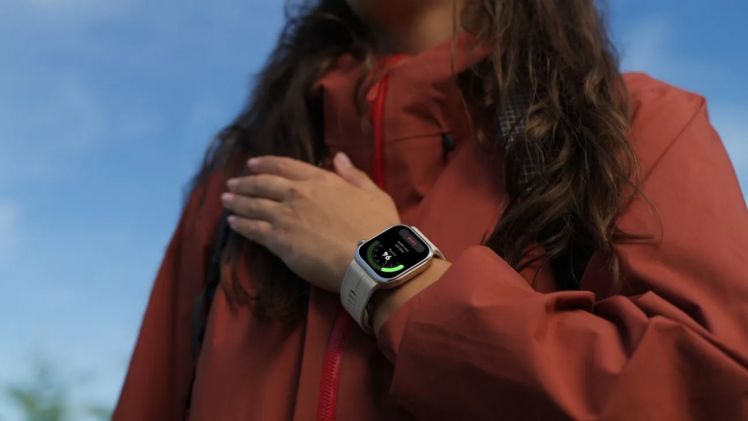
Ask a group of experts when to exercise and the answers will diverge — some champion dawn sessions, others insist the body performs best in late afternoon. The honest answer is more nuanced: timing interacts with individual blood pressure rhythms, and the best schedule is the one that matches both the body’s daily pattern and the reality of daily life. Wrist-worn monitoring with devices like the HUAWEI WATCH D3 makes it possible to discover that personal optimum experimentally, one well-timed session at a time.
The Daily Rhythm of Blood Pressure
Blood pressure follows a predictable arc: surging on waking, plateauing through the day, dipping in the evening and falling to its lowest point overnight. This circadian pattern means identical workouts land differently at different hours — a morning session meets the body at its daily pressure peak, while an evening session meets it on the downslope.
Neither is inherently superior, but the interaction matters. Training during the morning surge demands a gentler warm-up; evening sessions may suit higher intensity, though very late efforts can delay the night’s restorative dip.
The Case for Morning Sessions
Morning exercise carries practical magic: it happens before the day’s obligations accumulate, making it the most reliably kept appointment in many schedules. Fast-paced mornings do require extra care, however — a thorough warm-up to ease the cardiovascular system through its daily surge, and ideally a quick wrist reading beforehand to confirm the day is starting from a safe place.
The watch’s alert against intense exercise when pre-workout pressure is elevated is particularly valuable at this hour, catching the mornings when discretion should override discipline.
Lunchtime and Evening: The Alternative Windows
Midday sessions break up sedentary workdays and exploit the hours when body temperature and muscle function approach their daily best. Evening sessions often feel strongest of all — and research suggests evening aerobic exercise may deliver particularly favourable effects on night-time pressure patterns for some people.
The caveats are individual: late, intense sessions disturb sleep for some while leaving others unaffected. The TruSleep 5.0 analysis settles the question personally, showing whether evening workouts correlate with fragmented nights or perfectly sound ones.
Experimenting With the Data
The scientific way to find a personal optimum is delightfully simple: try each window for a couple of weeks, and measure. A wrist reading before each session and another capturing blood pressure after exercise within two minutes of finishing create comparable records across different times of day — revealing which slot produces the smoothest response, the quickest recovery and the best subsequent sleep.
Health Insights then assembles the evidence, charting workout logs alongside pressure trends and sleep scores until the pattern declares itself. Personal experimentation, once the province of elite athletes, now runs on an ordinary wrist.
Meals, Caffeine and the Timing Equation
Clock time is only half of the timing question; the body’s contents matter as much. A heavy meal diverts blood toward digestion for an hour or two, and a strong coffee taken shortly before a session lifts pressure independently of the exercise itself. Scheduling workouts an hour or more after eating — and keeping pre-session caffeine modest — removes two avoidable confounders from the experiment.
These details matter most to people comparing different time slots. A morning session run fasted and caffeinated is not being compared fairly with an evening session run fed and calm. Keeping the surrounding conditions consistent lets the time-of-day variable actually show its hand, and keeps the data clean enough to act on.
Shift Work and Irregular Schedules
Not everyone owns a conventional day, and the timing question looks different across night shifts and rotating rosters. The useful anchor is not the clock but the sleep-wake cycle: the ‘morning’ session is the one after the main sleep, whenever that sleep happens. Circadian rhythm follows behaviour more faithfully than it follows the hour printed on the wall.
For irregular schedules, measurement becomes even more valuable. Comparing recovery readings after sessions at different points in the personal cycle quickly reveals which windows the body tolerates best. Flexibility stops being a compromise and becomes a strategy — train when the data says the body is receptive, not when convention insists.
Reading the Two-Week Experiment
A personal timing trial needs only modest discipline: pick a window, keep conditions steady, and measure before and after each session for two weeks before switching. Three or four data points prove nothing; a dozen begin to speak. The comparison to watch is not single readings but the average descent — how far and how fast pressure falls once effort stops.
Most people finish the experiment with an unexpected answer. The theoretically optimal window often loses to the practically sustainable one, and occasionally a clear physiological favourite emerges that the calendar can then defend. Either result is a win: one removes guesswork, the other removes friction, and both make next month’s consistency far more likely.
Consistency Outranks Timing Every Time
Amid the optimisation, one truth towers over the rest: the best time to exercise is the time that actually happens, week after week. A perfect evening slot skipped three times weekly loses to an imperfect morning slot kept faithfully. For a deeper understanding of how sessions at any hour influence the numbers, this specialist guide to blood pressure after exercise — written by a preventive cardiology expert — provides the scientific foundation that makes every chosen window count.