
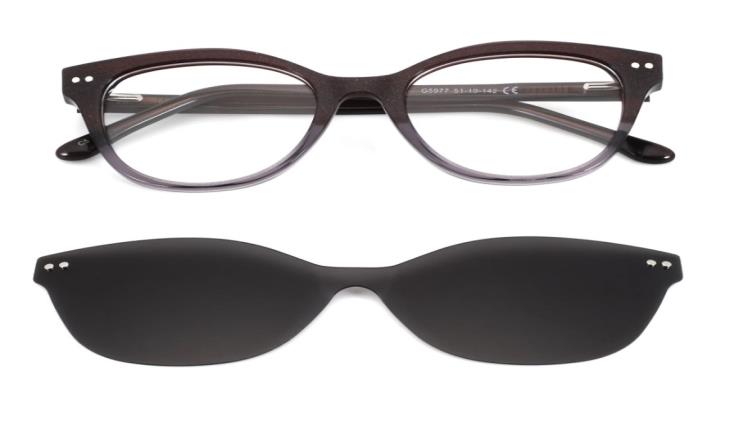
Every few months the eye-wear shelf resets. Shapes that felt inevitable in March look dated by September, and the frames that sold hardest are often the first to feel embarrassing in photographs. Somewhere behind that churn sits a shape that has never really participated in it. The circle predates the trend cycle by centuries, and it has outlived every attempt to declare it finished.
Where the Circle Earned Its Standing
The round lens is the oldest shape in eye-wear, and it arrived through manufacture rather than fashion. Early spectacle makers ground lenses on rotating wheels, so a circle was simply what came off the tool. That accident of process meant the first wearable optics were round, and every subsequent shape, from the rectangle to the aviator to the cat eye, arrived as a departure from it.
Because the circle was the default rather than a statement, it never got tied to a single decade. Rectangles read as early two-thousands. over sized squares carry a specific recent memory. The round frame has been claimed by so many groups that no one owns it: nineteenth-century academics, jazz musicians, sixties counterculture, architects, and the current generation of wearers who found it again through vintage shops rather than campaigns.
That breadth is why a round frame rarely dates a photograph. When a shape belongs to everyone, it belongs to no particular year. Collections built on this lineage, including the Round sunglasses ranges that anchor most heritage-minded assortments, tend to change slowly and deliberately, which is exactly the behavior you want from something you plan to wear for years.
Restraint and Spectacle Pull in Opposite Directions
Two different design instincts sit inside the same shape category, and confusing them is the most common mistake buyers make.
A spectacle frame is built to be noticed first. It uses scale beyond the face’s natural boundaries, high-contrast color, mirrored or gradient tints that draw the eye to the lens rather than the wearer, and hardware placed where you cannot miss it. It photographs well once. Worn daily, it becomes the only thing anyone registers, and it fixes you to whatever season produced it.
A restrained frame works the other way. Its proportions sit inside the face’s own geometry. color stays close to hair, brow, or skin tone. The tint is neutral enough that people still see your eyes. Details are present, whether a keyhole bridge, a subtle bevel on the rim, or a temple that tapers toward the tip, but you have to look to find them.
Restraint is not the same as blandness. A well-drawn round frame is a strong shape; it simply does not need to explain itself loudly. The useful test is whether the frame still looks right when you are tired, under dressed, or three years further into your life. Loud frames fail that test quickly.
Proportion Is the Whole Argument
Round frames have a reputation for being difficult, and the reputation is undeserved. What people usually mean is that badly proportioned round frames are unforgiving, which is true of every shape.
Three measurements decide the outcome. The frame’s overall width should end close to the outer edge of your temples rather than past them, since a frame wider than the face makes the head look smaller and the glasses look borrowed. The lens height should leave your brow visible above the rim; when a round lens swallows the eyebrow, the face loses its natural horizontal line and reads flat. And the bridge should sit so the lenses center on your pupils instead of riding high or low, because a circle exaggerates any asymmetry.
Face shape matters less than most guides claim, but it is not irrelevant:
- Angular faces, with square jaws or strong cheekbones, gain softness from a circular rim, and the contrast flatters rather than fusses.
- Rounder faces do better with a slightly flattened circle or a panto shape, which keeps the reference without echoing the face too closely.
- Longer faces benefit from a deeper lens and a lower bridge, which shortens the visual run from brow to chin.
Try the frame with your hair as you normally wear it. A round shape interacts with the outline of a haircut more than an angular one does, and a fitting-room mirror with your hair pushed back gives a misleading answer.
Materials That Improve Rather Than Degrade
Longevity is a material question as much as a design one. A shape that lasts decades is wasted on a frame that will not last two seasons.
Acetate, cut from cotton-based sheet stock, is the traditional choice for round frames because it holds a rim’s curve without stress marks and can be adjusted with heat when the fit shifts. Good acetate develops a slight softness at the contact points over time, which is why old frames often feel better than new ones. Thin metal suits a smaller circle and a lighter presence, and it tolerates being reshaped repeatedly by an optician.
The failure points are almost always the same regardless of material: hinges, and the joint where the temple meets the front. A hinge with more barrels distributes load better and loosens more slowly. A temple that flexes at the joint rather than the middle will eventually crack there.
Finish deserves a look too. Heavy gloss shows every scratch and fingerprint, and it reads more aggressively under artificial light. A matte or lightly polished surface hides wear and keeps the frame quiet, which suits the premise of choosing a shape you intend to keep.
Wearing Understatement Without Disappearing
A restrained frame asks slightly more of the rest of an outfit, because it will not do the work for you.
The easiest approach is to treat the frame as punctuation rather than a headline. Tailoring, work wear, and knitwear all take a round shape well, partly because the circle has a long association with people who dressed for function. Where round frames go wrong is when they are paired with an outfit that is also trying to signal something. Two statements compete, and neither wins.
color is the lever most people under use. A tortoise or amber acetate reads warm and disappears into most wardrobes. Clear or smoke acetate feels contemporary without becoming a trend marker. Black is the strongest option and the least forgiving, since a black circle against pale skin is genuinely high contrast, closer to spectacle than restraint. Brands with a heritage focus, ZENOTTIC among them, tend to keep their round assortments in this quieter tonal range for that reason.
If you are unsure, choose the version that a photograph from ten years ago would not immediately date. That instinct is usually right.
Care That Matches the Commitment
Frames chosen for the long term deserve maintenance that assumes a long term. Rinse lenses under cool water before wiping, because most scratches come from dry-cloth pressure grinding dust across the coating rather than from accidents. Store the glasses folded in a case instead of face-down on a surface, since a round lens has a larger uninterrupted center and shows abrasion there more visibly.
Have the fit checked once a year. Acetate relaxes, metal takes a set, and a frame that has slipped a few millimeters down the nose changes the proportion you originally chose it for. Small adjustments cost nothing at most opticians and restore the shape’s intended placement.
Screws loosen before hinges fail, so tightening them twice a year prevents the play that eventually wears a barrel out. None of this is demanding, but it is the difference between a frame you replace and a frame that stays in rotation long enough to make the original choice look sensible.
Why Heritage Shapes Outlast the Calendar
The contrast at the center of this is simple. Trend-driven eye-wear asks you to buy again next year; a shape with real lineage asks you to buy once and wear it properly. The round frame sits firmly in the second category, not because it is fashionable but because it has never depended on fashion to justify itself.
That makes the decision less about taste and more about judgment. Get the width, lens depth, and bridge placement right for your own face. Choose a material and finish that will look better worn than new. Keep the color close enough to your natural tones that the frame supports your face instead of announcing itself. Then leave the seasonal churn to people who enjoy replacing things.
A quiet circular frame chosen on those terms will still look deliberate in a decade, which is the only durable measure of whether eye-wear was worth buying. Loud frames borrow attention from the moment. Heritage shapes earn it slowly, and keep it.